6.2 South Asia: Civilization, Language, Religion, and Social Difference
Many South Asias
How can one region hold ancient continuities, hundreds of languages, multiple religious hearths, inherited hierarchies, and radically different social lives at once?

Learning objectives
After reading this section, you should be able to:
- Explain what archaeology reveals, and cannot yet reveal, about the Indus civilization.
- Describe how migration and cultural exchange shaped South Asian populations.
- Identify the region’s principal language families and explain why language can become politically important.
- Compare the origins and geographical diffusion of South Asia’s major religious traditions.
- Distinguish between varna and jati and explain how caste has changed over time.
- Analyze how gender, class, caste, religion, and location produce different experiences within South Asia.
A Region That Refuses the Singular
There is no single South Asian culture.
There are patterns that cross the region: monsoon agriculture, extended family networks, sacred landscapes, cricket matches, films, mobile phones, and foods that travel more easily than passports. Yet each similarity opens into difference. A language spoken by millions may change from one district to another. A religious tradition may contain philosophies, gods, rituals, and social practices that seem to contradict one another. One person may identify simultaneously with a village, caste, language, religion, profession, nation, and global diaspora.
It is better, then, to speak of many South Asias. The region was repeatedly made and remade through migration, trade, religious innovation, conquest, intermarriage, translation, hierarchy, and resistance. Some traditions have endured for thousands of years, but endurance is not the same as stillness.
South Asian history is sometimes described as a sequence of arrivals: early farmers, Indo-Aryan speakers, Persians, Greeks, Central Asians, Muslim merchants and rulers, Europeans, and others. People do arrive, but they seldom replace everything before them. They settle, bargain, marry, borrow words, adopt foods, reinterpret gods, and leave descendants who no longer consider themselves newcomers. Culture accumulates in layers, but the layers bleed into one another.
The region’s oldest cities offer an appropriate beginning. We can see what their inhabitants built, but we still cannot read what they wrote.
Cities Before History Could Speak
Around 2600 BCE, large urban centers appeared in the Indus basin and surrounding regions. The Indus, Indus Valley, or Harappan civilization extended from present-day Pakistan into northwestern and western India.
Harappa and Mohenjo-daro contained straight streets, wells, workshops, covered drains, storage areas, and buildings made with standardized bricks. Archaeologists have found calibrated weights, carved seals, pottery, jewelry, metalwork, and evidence of trade with Mesopotamia and Arabian Sea communities. These were not isolated farming villages. They belonged to an extensive urban and commercial world (Kenoyer, 1998).
Mohenjo-daro’s drainage system is especially memorable. Wastewater flowed from some buildings into covered street drains. This was not modern sanitation, but it required planning, labor, maintenance, and shared rules. A drain is an unromantic object, which may be why it is so revealing. Rulers build statues of themselves. Urban societies also reveal their priorities through what they arrange to carry away.
The civilization presents an unusual puzzle. Archaeologists have not found the enormous royal tombs or monumental palaces associated with Egypt and Mesopotamia. The Great Bath at Mohenjo-daro may have served ritual or civic purposes, but we do not know. It is tempting to conclude that Harappan society was unusually peaceful or equal. The evidence does not permit such confidence. Power may have existed without displaying itself in forms archaeologists readily recognize.
Short sequences of symbols appear on seals and other objects, but the script remains undeciphered. No bilingual text comparable to the Rosetta Stone has been discovered. We know something about how these people built, traded, and measured. We do not know what they called their cities, rulers, gods, or themselves.
This is a useful warning. Archaeology does not uncover the past whole. A brick wall may endure where a song disappears. A seal may survive while the joke once told about its owner is lost forever.
After about 1900 BCE, the great cities declined. Current research points toward a long transformation involving changing rivers, weakening monsoon rainfall, shifts in trade, and population movement rather than one sudden invasion. The people did not vanish. Many moved toward smaller settlements and different agricultural regions (Possehl, 2002).
Migration Without Racial Mythology
Older textbooks described a light-skinned “Aryan race” invading South Asia and defeating darker-skinned Dravidian peoples. That account mixed nineteenth-century racial theory with simplified readings of language and ancient texts. The word Aryan later acquired an especially poisonous life in European racial nationalism and Nazism.
It is more accurate to speak of Indo-Aryan language speakers. Indo-Aryan names a branch of the Indo-European language family, not a biological race. Groups associated with Steppe pastoralist ancestry entered South Asia during the second millennium BCE, but they encountered populations already shaped by earlier migrations and mixtures. Genetic, archaeological, and linguistic evidence describes complex interactions among populations connected to ancient Iranian agriculturalists, South Asian hunter-gatherers, Central Asian pastoralists, and others (Narasimhan et al., 2019).
Languages, genes, and cultures do not travel in identical packages. A community can adopt a language without most of its ancestry coming from that language’s earlier speakers. Children learn the speech of parents, neighbors, schools, employers, rulers, and religious communities. Languages spread through prestige, migration, trade, intermarriage, administration, and necessity.
Tamil is a Dravidian language and Hindi an Indo-Aryan language, but their speakers are not separate human races. They have been connected by trade, pilgrimage, migration, government, military service, film, education, and marriage for centuries. Culture is inherited, but it is also learned. Human beings are not sealed containers carrying civilizations intact through time. They are more like conversations, with voices entering, disappearing, and returning.
Languages That Carry History
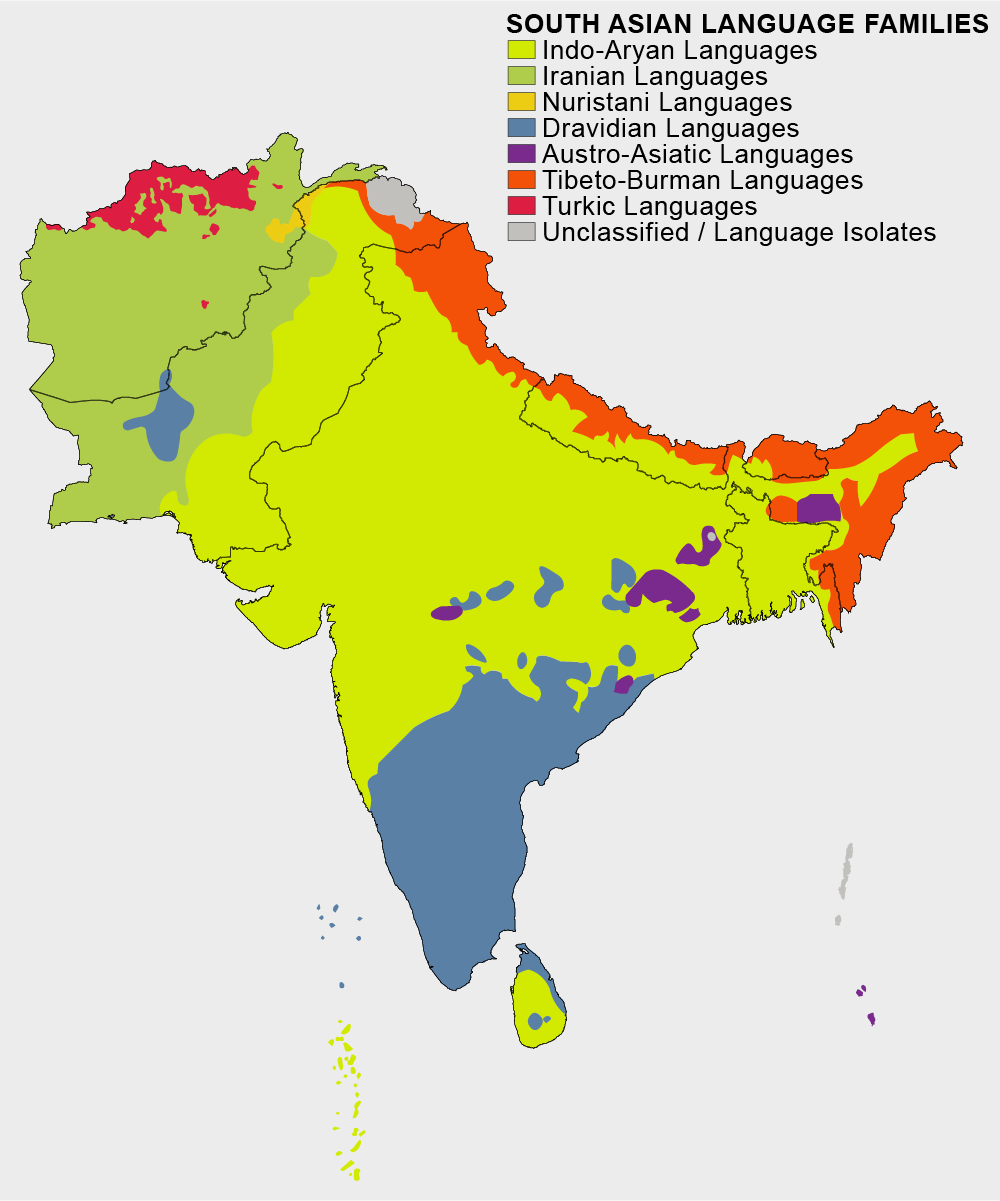
Indo-Aryan languages predominate across much of northern India, Pakistan, Bangladesh, Nepal, and Sri Lanka. They include Hindi, Urdu, Bengali, Punjabi, Marathi, Gujarati, Nepali, Sinhala, Assamese, and many others. Dravidian languages are concentrated in southern and parts of central India. Major examples include Tamil, Telugu, Kannada, and Malayalam. Tamil sustains one of the world’s oldest continuous literary traditions.
Austroasiatic languages, including Santali and Mundari, are spoken by communities in central and eastern India. Sino-Tibetan languages are widespread in Nepal, Bhutan, the Himalayan highlands, and northeastern India. These families contain hundreds of languages and varieties. Whether speech is called a language or a dialect is never purely linguistic. Writing systems, literary traditions, education, political recognition, and state boundaries all matter.
India’s Constitution lists 22 languages in its Eighth Schedule. Hindi is an official language of the Union government, while English remains in official use. States designate their own official languages, sometimes more than one. Contrary to a common claim, India has no single constitutionally designated national language (Legislative Department, Government of India, 2026).
Maps show languages as orderly blocks of color. Human speech is less obedient. Millions of people are multilingual. Someone may speak one language with grandparents, another in school, another at work, and another while watching films or using the internet. Languages mingle in markets, trains, apartment buildings, and migrant neighborhoods.
Hindi and Urdu demonstrate how political history can divide what remains a largely shared conversational continuum. Standard Hindi uses Devanagari and draws much formal vocabulary from Sanskrit. Standard Urdu uses a modified Persian-Arabic script and draws formal vocabulary from Persian and Arabic. Speakers can often understand one another in ordinary conversation, yet colonial politics and competing national movements enlarged and institutionalized their differences.
A language can therefore be close enough to permit conversation and different enough to carry a border.
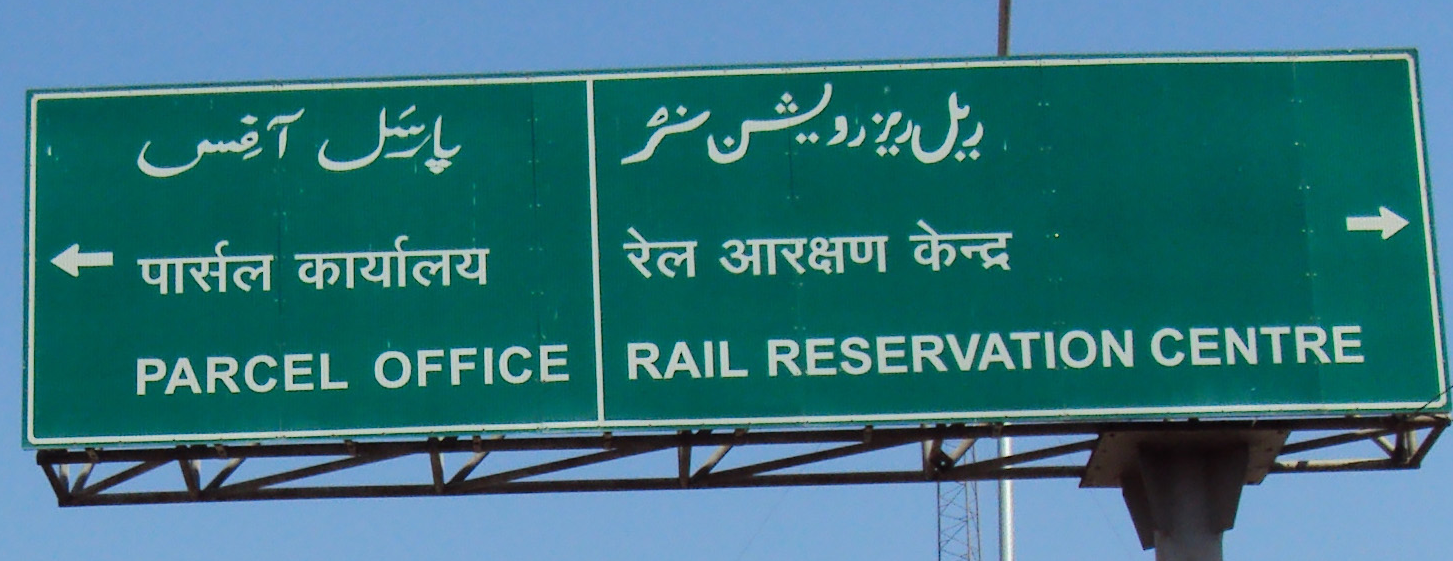
One Sentence, Two Scripts
Switch among everyday Hindustani and more formal registers. The exercise separates differences a reader sees from differences a listener hears.
The writing systems look very different. Spoken aloud, the ordinary sentences are nearly the same.
Bengali offers another lesson. In 1948, Pakistan’s central government promoted Urdu as the principal national language even though most residents of geographically separated East Pakistan spoke Bengali. Students and activists protested. Police killed demonstrators in Dhaka on February 21, 1952. The Language Movement became a symbol of Bengali identity and resistance to domination from West Pakistan. Language did not alone create Bangladesh, a story we will follow in Section 3, but it expressed the larger conflict with unusual clarity. UNESCO later made February 21 International Mother Language Day, based on an initiative from Bangladesh (UNESCO, 2026a).

English entered through empire but did not disappear with independence. It remains important in universities, courts, science, medicine, government, software, and international business. English can be a bridge among people who share no other language. It can also be a gate. Students attending well-funded English-language schools gain advantages unavailable to many students in under-resourced regional-language schools. The language of opportunity has its own geography.
A Hearth and Crossroads of Religion
Hindu traditions, Buddhism, Jainism, and Sikhism originated in South Asia. Islam, Christianity, and Zoroastrianism arrived from elsewhere but developed South Asian histories of their own. Indigenous and local traditions have interacted with all of them.
Religion here is not simply private belief. It appears in pilgrimage routes, calendars, architecture, music, marriage, clothing, dietary practices, and political movements. A river can be a goddess. A mountain can be a divine dwelling. A city can become sacred because of events believed to have occurred there centuries ago. Yet labels hide internal diversity. Two people identified as Hindu, Muslim, Buddhist, Christian, or Sikh may disagree about theology, politics, ritual, caste, and gender. A map needs categories. Human conviction rarely remains inside them.
Hinduism has no single founder or central authority. The name describes a diverse family of traditions that developed through Vedic practices, regional religions, philosophy, devotional movements, temple traditions, and household rituals. Concepts such as karma, dharma, samsara, and moksha recur, but never with only one interpretation. Hindus may center devotion on Vishnu, Shiva, a goddess, or local deities, and may emphasize pilgrimage, meditation, temple worship, songs, family ritual, philosophy, or service. Diversity is not a problem awaiting standardization. It is one of the tradition’s organizing characteristics.
The Ganges illustrates sacred geography. For many Hindus, the river is Ganga, a goddess whose waters connect human life with the sacred. Varanasi attracts pilgrims who bathe, pray, cremate the dead, and scatter ashes. Sacred geography creates connection without erasing difference.

Buddhism and Jainism emerged in northern South Asia amid debates about ritual authority, hierarchy, desire, violence, and rebirth. Siddhartha Gautama, the Buddha, taught that suffering is connected to craving and attachment and that liberation is possible through ethical conduct, mental discipline, and insight. Supported by the Mauryan emperor Ashoka in the third century BCE, Buddhist institutions and ideas spread through Sri Lanka, Central Asia, Tibet, Southeast Asia, China, Korea, and Japan. Buddhism later declined across much of India while reshaping much of Asia. It is a striking geographical reversal: a tradition can become less numerous in its birthplace while transforming a continent.
Jain traditions place extraordinary emphasis on ahimsa, or avoiding harm to living beings. Monastic specialists may take elaborate precautions to avoid harming even small forms of life, while lay Jains commonly practice vegetarianism. Jainism has never had the numerical reach of the region’s largest religions, but numbers are a poor measure of influence. Its ethics of nonviolence and self-discipline have traveled far beyond the Jain community.
Islam reached South Asia by several routes. Arab merchants settled in ports along India’s western coast and Sri Lanka centuries before Muslim dynasties ruled large inland territories. Conquest and Muslim states also mattered, as did Persianate courts, urban cultures, land settlement, Sufi teachers, occupations, marriage, and trade. Conversion was gradual and locally varied. Sufi shrines sometimes attracted Muslims and non-Muslims, a reminder that lived religion exceeds the clean categories of later censuses and maps. Pakistan, Bangladesh, Afghanistan, and the Maldives are Muslim-majority countries. India is Hindu-majority but is also home to one of the world’s largest Muslim populations.
Sikhism developed in Punjab beginning with Guru Nanak in the fifteenth and sixteenth centuries. Sikh tradition emphasizes one God, service, equality, and community. Authority passed through ten human gurus and then to the Guru Granth Sahib, the community’s central scripture and continuing guru.
The Golden Temple at Amritsar is Sikhism’s most important pilgrimage site, but one of its most revealing institutions is the langar, or communal kitchen. Visitors receive food without charge and sit together regardless of caste, wealth, or status. Equality is enacted with metal plates, shared floors, enormous cooking pots, donated vegetables, and volunteer labor. A meal cannot abolish every hierarchy. It can demonstrate what another social order is meant to feel like.

Christian communities in South India trace their history to Christianity’s early centuries, while later communities developed through European rule, missionary work, migration, and local conversion. Zoroastrians from Persia, known in South Asia as Parsis, became especially influential in Mumbai’s commercial and philanthropic life. Adivasi and other Indigenous communities maintain varied relationships with ancestors, spirits, forests, mountains, and local deities. Some people also identify with a larger religion while preserving older community practices. A census box can make a complicated spiritual world appear tidier than it is.
Caste: Ancient Hierarchy, Modern Instruments
Few features of South Asian society are more often oversimplified than caste. Varna and jati are not the same thing. Varna is an idealized four-part division found in some Sanskrit traditions: Brahmins, associated with priestly and scholarly roles; Kshatriyas, with rulers and warriors; Vaishyas, with agriculture and commerce; and Shudras, with labor and service. This model never fully described social life.
Jatis are thousands of localized, birth-based communities connected to marriage, kinship, occupation, region, and status. Their boundaries could be restrictive without being identical everywhere or completely motionless. Communities migrated, changed occupations, adopted new customs, formed alliances, and disputed their classification. Caste was durable without being frozen.
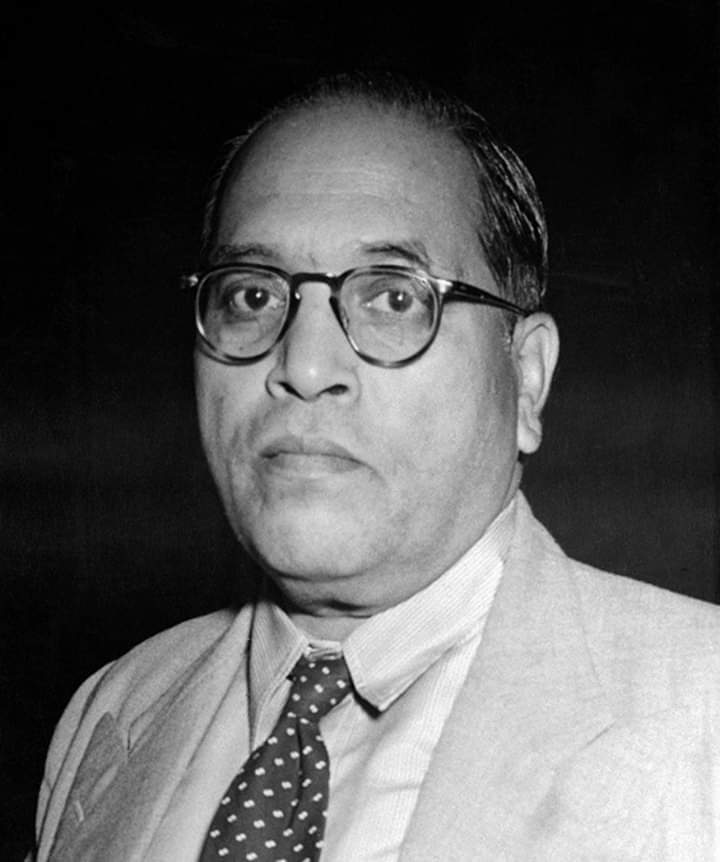
People historically placed outside or beneath the varna order suffered practices of untouchability and severe exclusion. Many now use the political identity Dalit, meaning oppressed or broken. B. R. Ambedkar, born into a Dalit community, became one of caste’s most powerful critics and chaired the committee that drafted India’s Constitution. He argued that voting rights meant little if inherited hierarchy continued to govern education, housing, employment, worship, and marriage.
India’s Constitution prohibits untouchability. Reservation policies, a form of affirmative action, seek to expand education, government employment, and political representation for Scheduled Castes, Scheduled Tribes, and Other Backward Classes. These policies have expanded opportunity while remaining intensely debated.
Colonial rule did not invent caste, but British administrators classified and counted it. Official categories sometimes turned flexible or disputed identities into administrative facts. Once a state writes an identity into law, it may become harder to escape and more useful for political organization (Bayly, 1999; Dirks, 2001).
Urbanization and technology have changed caste without abolishing it. Matrimonial websites can filter spouses by caste. Political parties analyze caste composition with digital databases. Social media enables anti-caste organizing while also circulating prejudice. A smartphone does not automatically dissolve an old boundary. It may simply give the boundary new instruments.
One Person, Four Institutions
Change the institutional lens. Each system makes some identity layers visible while allowing others to disappear. The layers are a teaching schematic, not a profile of one real person.
Home language
speech, memory, familyPublic languages
school, work, governmentReligion
belief, ritual, communityCaste or community
kinship, status, networksGender
expectations, access, safetyPlace
village, neighborhood, regionClass and education
resources, credentialsDiaspora ties
migration, money, mediaThe census makes categories countable
Language, religion, caste category, gender, and location may become boxes in a national data system. Multilingual routines, disputed identities, and the meanings people attach to those categories are harder to record.
What becomes measurable can shape representation and resources. What disappears from the form may disappear from policy.
India’s 2027 Census is therefore significant. The government has formally decided that the population enumeration will include caste enumeration for all individuals, the first such nationwide exercise since independence. Supporters argue that better data are necessary to measure inequality and distribute resources. Critics fear official counting may harden identities and intensify political competition. Measuring a hierarchy can help expose it, but an official category can also become a durable political object (Press Information Bureau, Government of India, 2026).
Gender and Uneven Change
It is easy to describe South Asian women only through disadvantage. That makes serious inequalities visible but reduces hundreds of millions of people to one category of victims. Women are political leaders, farmers, physicians, teachers, garment workers, engineers, domestic workers, activists, artists, migrants, and business owners. A professional woman in Bengaluru, a tea worker in Sri Lanka, a garment worker in Dhaka, and a farmer in Nepal do not inhabit the same social world simply because they are women.
The region has made substantial gains in girls’ education, literacy, health, and survival. Yet progress in one area does not guarantee equality elsewhere. A girl may complete school and then face pressure to marry, remain home, avoid certain occupations, or leave paid work after having children. Across South Asia, girls ages 15 to 19 are three times as likely as boys to be outside education, employment, or training. Education can expand aspirations faster than labor markets and household expectations change (UNICEF, 2025).
Inequality is not produced by “tradition” alone. Transportation, housing, labor markets, law enforcement, digital access, and public policy influence what women can do. A family may support a daughter’s education but fear for her safety during a long commute. A woman may own a phone but have less freedom than male relatives to use it privately.
Afghanistan represents the region’s most extreme reversal. Since the Taliban returned to power in 2021, girls and women have been barred nationally from secondary and higher education. By 2025, roughly 2.2 million adolescent girls had been shut out of classrooms beyond primary school (UNESCO, 2026b). Across the same region, other women enter universities, parliaments, factories, and technology careers. Change advances, stalls, and sometimes reverses.
When Culture Becomes Political
Language, religion, caste, and gender are not merely private characteristics. They organize access to institutions, land, education, employment, marriage, and power. When governments count identities, give them legal status, assign them territories, or claim to rule in their name, culture becomes political geography.
Diversity does not inevitably produce conflict. Multilingual and multireligious communities have shared neighborhoods, workplaces, shrines, schools, music, and food for centuries. Identities become dangerous when political movements teach people that coexistence is weakness, neighbors are invaders, or a nation naturally belongs to only one community.
South Asia’s ethical traditions have articulated compassion, nonviolence, service, equality, and universal human worth. The region has also preserved caste exclusion, patriarchy, religious nationalism, and communal violence. This is not a uniquely South Asian contradiction. Civilizations are not consistent moral personalities. They contain arguments about what human beings owe one another.
The people of South Asia did not suddenly become different when modern borders appeared. Their differences acquired censuses, electoral districts, armies, and frontiers. The next section follows that transformation through empire, nationalism, Partition, and the modern state.
The Main Ideas
- South Asia is better understood as a region of overlapping histories than as a single culture. Migration, trade, intermarriage, translation, and political change repeatedly remade older patterns.
- The Indus civilization demonstrates both the power and the limits of archaeology: cities, drains, weights, and seals survive, while the undeciphered script keeps many voices inaccessible.
- Language families reveal deep historical patterns, but multilingual daily life crosses the neat boundaries shown on maps. Hindi and Urdu show how politics, scripts, and formal vocabulary can widen differences within a largely shared conversational continuum.
- South Asia is both a religious hearth and a crossroads. Hindu, Buddhist, Jain, Sikh, Muslim, Christian, Zoroastrian, Indigenous, and local traditions created sacred geographies that rarely fit cleanly inside modern borders.
- Caste is not one timeless four-part ladder. Varna is an idealized model, while thousands of jatis developed through local histories. Law, reservation, migration, cities, politics, and digital technology have changed caste without simply erasing it.
- Gender, class, caste, religion, language, and place intersect. Social change can advance rapidly in one institution and stall or reverse in another, which is why there is no single South Asian experience.
Key Terms and Definitions
- Ahimsa
- The ethical principle of avoiding harm to living beings, especially central to Jainism.
- Caste
- A broad term for inherited systems of social identity and hierarchy, especially those organized through varna and jati.
- Dalit
- A political and social identity used by many people from communities historically subjected to untouchability and caste oppression.
- Diaspora
- A population dispersed from an ancestral homeland while maintaining connections to it.
- Indo-Aryan
- A branch of the Indo-European language family spoken across much of northern South Asia.
- Jati
- A localized, birth-based social community traditionally connected to marriage, occupation, and status.
- Langar
- The communal kitchen associated with Sikh institutions, where food is served without regard to caste or wealth.
- Multilingualism
- The regular use of more than one language by an individual or community.
- Reservation
- India’s system of affirmative action for historically disadvantaged social groups.
- Sacred geography
- A landscape understood through religious meaning, memory, pilgrimage, or divine connection.
- Sufi
- A term associated with varied mystical and devotional traditions within Islam.
- Varna
- An idealized four-part model of social classification described in some Hindu texts.
Thinking Geographically
- What does the undeciphered Indus script prevent historians from knowing?
- Why is it misleading to describe Indo-Aryans and Dravidians as biological races?
- How can a language spread without genetic replacement?
- Why are Hindi and Urdu both closely related and politically distinct?
- Why can English function as both a bridge and a gate?
- How did Buddhism become more geographically widespread outside its birthplace?
- What does langar communicate about equality?
- What is the difference between varna and jati?
- How can digital technology weaken and reproduce social boundaries at the same time?
- Why might caste enumeration both challenge and reinforce caste identities?
- Why is a single narrative of women’s experience inadequate for South Asia?
Works Cited & Further Reading
- Bayly, S. (1999). Caste, society and politics in India from the eighteenth century to the modern age. Cambridge University Press.
- Dirks, N. B. (2001). Castes of mind: Colonialism and the making of modern India. Princeton University Press.
- Kenoyer, J. M. (1998). Ancient cities of the Indus Valley civilization. Oxford University Press.
- Legislative Department, Government of India. (2026). The Constitution of India. Ministry of Law and Justice. Official 2026 text.
- Narasimhan, V. M., et al. (2019). The formation of human populations in South and Central Asia. Science, 365(6457), eaat7487. DOI.
- Possehl, G. L. (2002). The Indus civilization: A contemporary perspective. AltaMira Press.
- Press Information Bureau, Government of India. (2026, April 25). Census 2027: India’s first digital enumeration exercise. Government backgrounder.
- UNICEF. (2025, March 7). Fast facts: 30 years of uneven progress for adolescent girls. UNICEF.
- UNESCO. (2026). International Mother Language Day. UNESCO.
- UNESCO & UNICEF. (2026, January 24). UNESCO and UNICEF urge action to protect the right to education in Afghanistan. Joint statement.
Visual Credits
Open visual and map notes
The six photographs and the language-family map link to their Wikimedia Commons source pages and retain the creator and license information shown in their captions. The sacred-geographies map uses Natural Earth national boundaries and selected illustrative sites and exchange routes. It is intentionally not a map of religious majorities and is not exhaustive.


Comments
Post a Comment